

The adapter is used in instruments and meters,test wiring harnesses,and communication equipment.The solder joints are the key components of the adapter structure.The detachment of solder joints can cause intermittent signals,unstable contact,and inconsistent impedance.Users often encounter various reasons for the detachment of solder joints during on-site maintenance.
One of the common reasons for solder joints to fall off is insufficient welding process temperature.Insufficient temperature will cause the solder not to fully wet the pads or conductors.A granular structure will appear on the surface of the solder.Over time,it will break from the root of the solder joint.This situation is more common in mass production.
Another reason for the detachment of solder joints is excessive temperature.Excessive temperature can cause the solder joints to become brittle.A coarse crystal structure appears within the tin layer.The solder joints are prone to breaking after vibration or bending.Some low-temperature materials will undergo deformation in a high-temperature environment.
The solder joints may also come off due to insufficient cleanliness of the pads.If there is oil,oxide layer or residue on the surface,the solder cannot be fully wetted.This results in a weak solder joint.The weak solder joint is prone to come off under external force.Users often encounter weak solder joints caused by oil stains during on-site repairs.
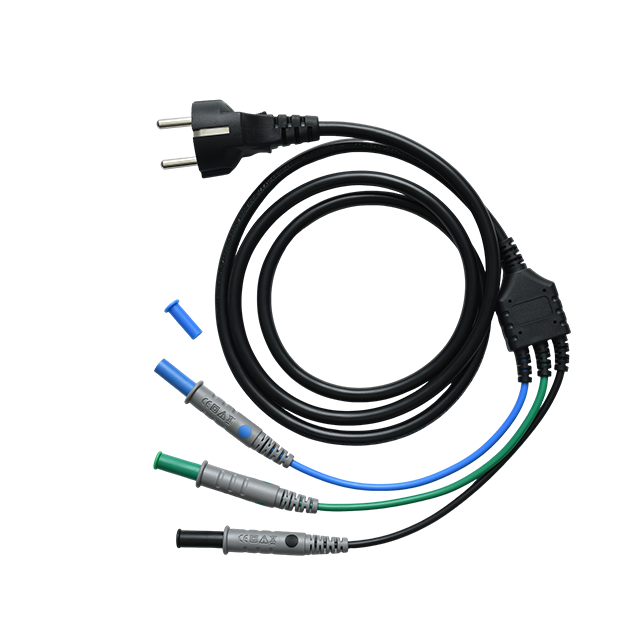
The detachment of solder joints may be caused by uneven force on the cables.When the cables are not securely fixed,they generate traction.The end of the connector is subjected to excessive external force.The solder joints are constantly pulled,resulting in metal fatigue.Eventually,they break.
The detachment of solder joints may also be caused by material mismatch.Some metal materials have poor wetting properties with solder.The bonding strength of the solder joints is insufficient.This is commonly seen in aluminum materials or those with uneven coatings.Instability of the materials will increase the risk of detachment.
The detachment of solder joints may be due to unstable solder quality,temperature deviation during melting,excessive internal impurities,uneven formation of solder joints,and reduced抗震ability.Users can clearly perceive such phenomena in high-vibration equipment.
The detachment of solder joints may also be caused by environmental factors.Excessive humidity leads to oxidation of the solder joints.Large temperature differences cause frequent expansion and contraction of the metal.Insufficient sealing of the casing allows corrosion products to seep into the solder joints.
The detachment of solder joints is also affected by improper control of the welding time at the operation end.If the welding time is too short,the adhesion force of the solder joints will be insufficient.If the welding time is too long,the solder pads will be damaged.
When dealing with the problem of solder joints falling off,users usually investigate from aspects such as welding process,material structure,mechanical protection,and environmental management.Strengthening the stress buffering at the end can reduce the probability of detachment.

Address: Room 503, Building 3, No. 36, Longyan Industrial Road, Humen Town, Dongguan City, Guangdong Province
Number: 135-0984-750
Email: dgiaz168@163.com