

Power adapter cables are widely used in power supply systems,equipment debugging,and experimental platforms.The different conductor materials determine the conductivity,temperature resistance,mechanical strength,and lifespan of the adapter cables.When users choose power adapter cables,they often compare the differences among copper cores,tin-plated copper cores,aluminum cores,and copper-clad aluminum cores.
The copper-core power adapter has excellent conductivity.Copper has a low resistivity and a small voltage drop.It is suitable for long-distance or high-load environments.Copper has high ductility.It is not prone to breakage even after bending.It is suitable for equipment with long-term operation.Copper materials have a high temperature resistance level.They can withstand high current surges.However,the cost of copper cores is higher.The overall weight of the wire is relatively heavy.
The tin-plated copper core power adapter has a good resistance to oxidation.Copper tends to oxidize in a humid environment.The surface tin coating can slow down the oxidation process.The tin coating enhances the reliability of the solder joints.It is suitable for outdoor,humid workshops,and environments with corrosive gases.Its conductivity is similar to that of pure copper.The mechanical properties are stable.Users often choose it in the power supply of automated equipment and the testing platforms of instruments.
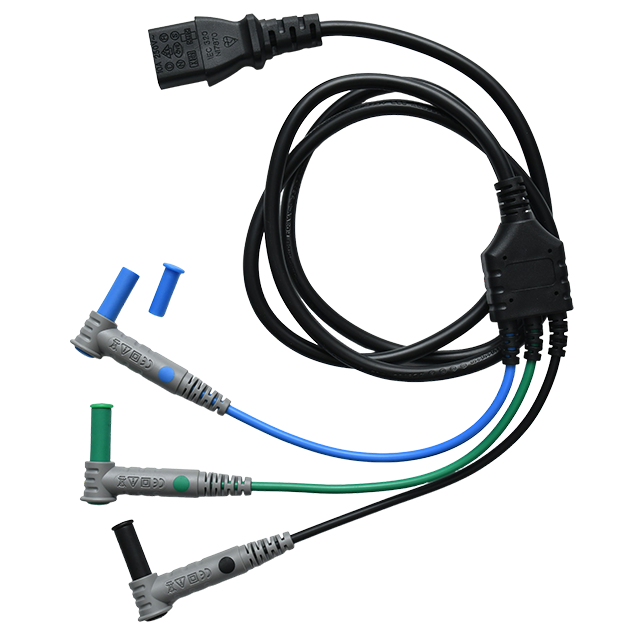
The aluminum core power adapter is lightweight and has a lower cost.It is suitable for scenarios with high mobility requirements.Aluminum has a high resistivity.Under the same current conditions,a thicker wire diameter is required.Aluminum has weak bending ability.Repeated bending is prone to breakage.It is suitable for fixed installation environments.Users rarely use aluminum cores in the power supply requirements of portable devices.
The copper-clad aluminum core power adapter cable offers both cost advantages and certain conductivity.It is made of aluminum inside and copper on the outside.It is lightweight.The resistance is between that of copper and aluminum.It is suitable for medium-load conditions.The drawback is that its bending life is short.If the end pressing connection is not tight,it is prone to unstable contact.
Different conductor materials exhibit different temperature rise characteristics.Copper cores have the lowest temperature rise.Tin-plated copper cores are similar to copper cores.Aluminum cores have a higher temperature rise.Copper-clad aluminum depends on the structure.Users usually choose copper cores or tin-plated copper cores in scenarios with high power supply demands.
The mechanical strength performance of different conductor materials varies significantly.Copper has a high tensile strength.Aluminum is relatively weak.Copper-clad aluminum lies between the two.Users mostly use copper-core structures in the debugging stations of mobile devices.
There are also differences in corrosion resistance among various materials.Copper is prone to oxidation.Tin-plated copper cores have a more outstanding anti-corrosion performance.Aluminum is likely to form an oxide film in humid environments,which affects the contact performance.
The material selection for the power adapter should be determined based on the load,voltage,environment and movement frequency.Choosing the appropriate material can enhance the stability of power supply.

Address: Room 503, Building 3, No. 36, Longyan Industrial Road, Humen Town, Dongguan City, Guangdong Province
Number: 135-0984-750
Email: dgiaz168@163.com